Flat Roof Repair vs. Replacement: A Guide for Michigan Property Managers
How to determine whether repairing or replacing a commercial flat roof makes the most financial and operational sense for your property.
For property managers, building owners, facility managers, and HOA boards, few roofing decisions are as important—or potentially expensive—as deciding whether a failing flat roof should be repaired or completely replaced.
A roof leak does not automatically mean your commercial roof needs replacement. In many situations, a targeted repair can restore the roofing system and provide years of additional service. In other cases, repeatedly repairing an aging or deteriorated roof can become more expensive than investing in a properly designed replacement.
The decision becomes even more important in Michigan, where commercial roofs are exposed to heavy snow, freeze-thaw cycles, standing water, summer heat, wind, ice, and dramatic temperature changes throughout the year.
At Sterling Construction & Roofing, we work with commercial property owners and managers throughout Metro Detroit and Southeast Michigan to inspect flat roofing systems, identify the source and extent of deterioration, and determine whether flat roof repair or replacement provides the better long-term solution.
Flat Roof Repair vs. Replacement: The Short Answer
A commercial flat roof should generally be repaired when damage is localized, the underlying roof assembly remains in good condition, moisture infiltration is limited, and the roof still has meaningful service life remaining.
Replacement becomes more appropriate when deterioration is widespread, leaks repeatedly return, insulation or decking has been compromised, the roofing system is approaching the end of its expected service life, or continued repairs no longer make financial sense.
Age alone should not determine the answer. Two roofs of the same age can have dramatically different conditions depending on the roofing material, installation quality, drainage, maintenance history, foot traffic, previous repairs, insulation, and exposure.
That is why a professional commercial roof inspection should generally come before making a major repair-or-replacement decision.
Why Flat Roof Decisions Are Different for Commercial Properties
Commercial roofing is very different from replacing shingles on a typical residential home. Flat and low-slope commercial roofing systems function as assemblies involving membranes, insulation, flashing, drainage components, penetrations, decking, curbs, seams, and rooftop mechanical equipment.
A leak appearing inside a building may originate some distance away from where water is actually entering the roofing system. Water can migrate through insulation or along structural components before becoming visible indoors.
Property managers also have considerations beyond the immediate roof condition. Tenant disruption, inventory protection, building operations, capital budgets, insurance requirements, warranties, energy performance, future ownership plans, and scheduled property improvements can all influence the appropriate roofing strategy.
For a multi-building portfolio, an effective roofing strategy may even involve repairing one building, replacing another, and establishing a preventative maintenance plan for the remaining properties.
When Does Flat Roof Repair Make Sense?
Repair is often the most economical option when the overall commercial roofing system remains serviceable and the problem can be isolated. The objective should not simply be to stop visible water temporarily. A quality repair addresses the underlying failure and restores the integrity of the affected portion of the roofing system.
1. The Damage Is Localized
A puncture, damaged seam, failed flashing detail, isolated membrane problem, or localized storm-damaged area may not justify replacing an otherwise functional roof. If the surrounding membrane, insulation, drainage, and substrate remain sound, targeted commercial roof repair may be the more responsible investment.
2. The Roof Is Relatively Young
If a roofing system is well within its anticipated service life, replacement may be premature. The more important questions are why the failure occurred and whether it represents an isolated problem or evidence of a larger installation or system issue.
3. Moisture Has Not Spread Throughout the Roof Assembly
Limited moisture intrusion can sometimes be addressed by removing and replacing affected roofing materials and insulation. Once moisture becomes widespread beneath the membrane, however, repairs become substantially less attractive.
4. The Roof Has Not Developed a Pattern of Recurring Leaks
A single leak is very different from a roof that requires service every few months. Property managers should track roof repair history because repeated service calls can reveal that a roofing system is deteriorating beyond the point where individual repairs remain cost-effective.
5. Repair Preserves an Existing Warranty
When applicable, repairs should be evaluated in the context of existing manufacturer and contractor warranties. Before authorizing work, property managers should determine whether specific repair procedures or approved materials are required to maintain warranty coverage.
When Should a Commercial Flat Roof Be Replaced?
There comes a point when repairing a commercial roof begins treating symptoms rather than solving the underlying problem. Replacement allows damaged components to be addressed comprehensively and gives the property owner an opportunity to install a new roofing system designed around the building’s current needs.
Recurring Roof Leaks
Repeated leaks are one of the clearest warning signs. If a property manager is continually dispatching contractors to different portions of the roof, the cumulative cost of repairs, interior damage, tenant complaints, and operational disruption should be compared with replacement.
Widespread Membrane Deterioration
Cracking, splitting, open seams, shrinkage, extensive blistering, or widespread deterioration can indicate that the membrane is no longer providing dependable protection. The exact warning signs vary among TPO, EPDM, PVC, modified bitumen, and other commercial roofing systems.
Wet or Deteriorated Insulation
Water trapped beneath a commercial roofing membrane can affect insulation performance and contribute to continued deterioration. If moisture has spread across substantial portions of the roof assembly, repeatedly patching the surface membrane may not address the underlying problem.
Extensive Ponding or Drainage Problems
Flat roofs are technically low-slope systems designed to move water toward drains, scuppers, or gutters. Persistent standing water can accelerate deterioration and may indicate drainage, slope, structural, or insulation-related problems that need to be addressed as part of a larger roofing project.
The Existing Roof Is Near the End of Its Useful Life
No commercial roofing system lasts indefinitely. When an older roof begins experiencing multiple simultaneous problems, investing heavily in short-term repairs may simply postpone an inevitable capital project.
Repair Costs Are Becoming a Recurring Operating Expense
Property managers should look beyond the price of the next repair. Review the previous several years of service calls, leak response costs, interior restoration, damaged inventory, tenant issues, and emergency work. The total cost of keeping an unreliable roof operational can materially change the repair-versus-replacement calculation.
Flat Roof Repair vs. Replacement: Key Factors to Compare
| Factor | Repair May Make Sense | Replacement May Make Sense |
|---|---|---|
| Damage | Localized | Widespread |
| Leaks | Isolated or first occurrence | Recurring across multiple areas |
| Roof Age | Meaningful service life remains | Approaching end of useful life |
| Insulation | Mostly dry and intact | Significant moisture or deterioration |
| Membrane | Generally sound | Widespread deterioration |
| Repair History | Limited previous repairs | Increasing service frequency |
| Budget Strategy | Preserve capital while maintaining a sound system | Reduce recurring repair exposure with a capital improvement |
This comparison is a starting point rather than a substitute for an inspection. The condition of the membrane, insulation, substrate, drainage, penetrations, and flashing should all be considered before making a major roofing decision.
How Much Does Flat Roof Repair Cost in Michigan?
There is no responsible single-price answer for flat roof cost in Michigan because commercial roof repair can range from correcting a small flashing or membrane problem to removing substantial wet roofing material and rebuilding part of the roof assembly.
Commercial flat roof repair pricing can be affected by the roof system, square footage of the damaged area, accessibility, building height, insulation condition, decking, drainage, penetrations, labor requirements, material availability, safety requirements, and whether emergency service is required.
Why the Cheapest Repair Is Not Always the Least Expensive Option
A low-cost patch can appear attractive when a leak needs immediate attention. But if the underlying cause is not diagnosed, the property may incur another service call, additional interior damage, and another repair shortly afterward.
For property managers, the better question is often: What will this repair cost over the remaining useful life of the roof?
How Much Does Commercial Flat Roof Replacement Cost in Michigan?
Commercial flat roof replacement is typically priced after evaluating the existing roof assembly and developing a project-specific scope. Square footage matters, but it is only one component of the final cost.
Factors That Affect Commercial Roof Replacement Cost
- Overall roof size and configuration
- TPO, EPDM, PVC, modified bitumen, coating, or other specified system
- Existing membrane and number of roof layers
- Tear-off and disposal requirements
- Condition of insulation and roof decking
- Insulation type and required R-value
- Roof access and building height
- Drainage modifications
- Parapets, flashing, penetrations, curbs, and rooftop equipment
- Safety and staging requirements
- Manufacturer specifications and warranty requirements
- Project scheduling and operational constraints
Because these variables can materially change the scope, property managers comparing proposals should evaluate more than the bottom-line number. Make sure contractors are bidding comparable systems, insulation, tear-off requirements, flashing details, warranties, and project scopes.

Repair, Recover, or Replace? Property Managers May Have Three Options
The decision is not always limited to repair versus complete tear-off and replacement. Depending on the existing roofing system, moisture conditions, building code requirements, and manufacturer specifications, some commercial properties may qualify for a roof recover or restoration approach.
Repair
Address specific defects while retaining the majority of the existing roofing system.
Recover or Restoration
Install an appropriate new roofing or restoration system over a suitable existing assembly when conditions allow. This option requires careful evaluation because trapping existing moisture beneath a new system can create serious problems.
Full Replacement
Remove the applicable existing roofing materials, address damaged components, and install a new roofing assembly. Replacement provides the greatest opportunity to correct underlying deficiencies and redesign portions of the system when necessary.
Commercial Flat Roofing Systems Commonly Found in Metro Detroit
The type of roofing system on your property affects how damage is diagnosed, repaired, restored, and eventually replaced. Sterling Construction & Roofing works with several common commercial roofing systems throughout Metro Detroit and Southeast Michigan.
TPO Roofing
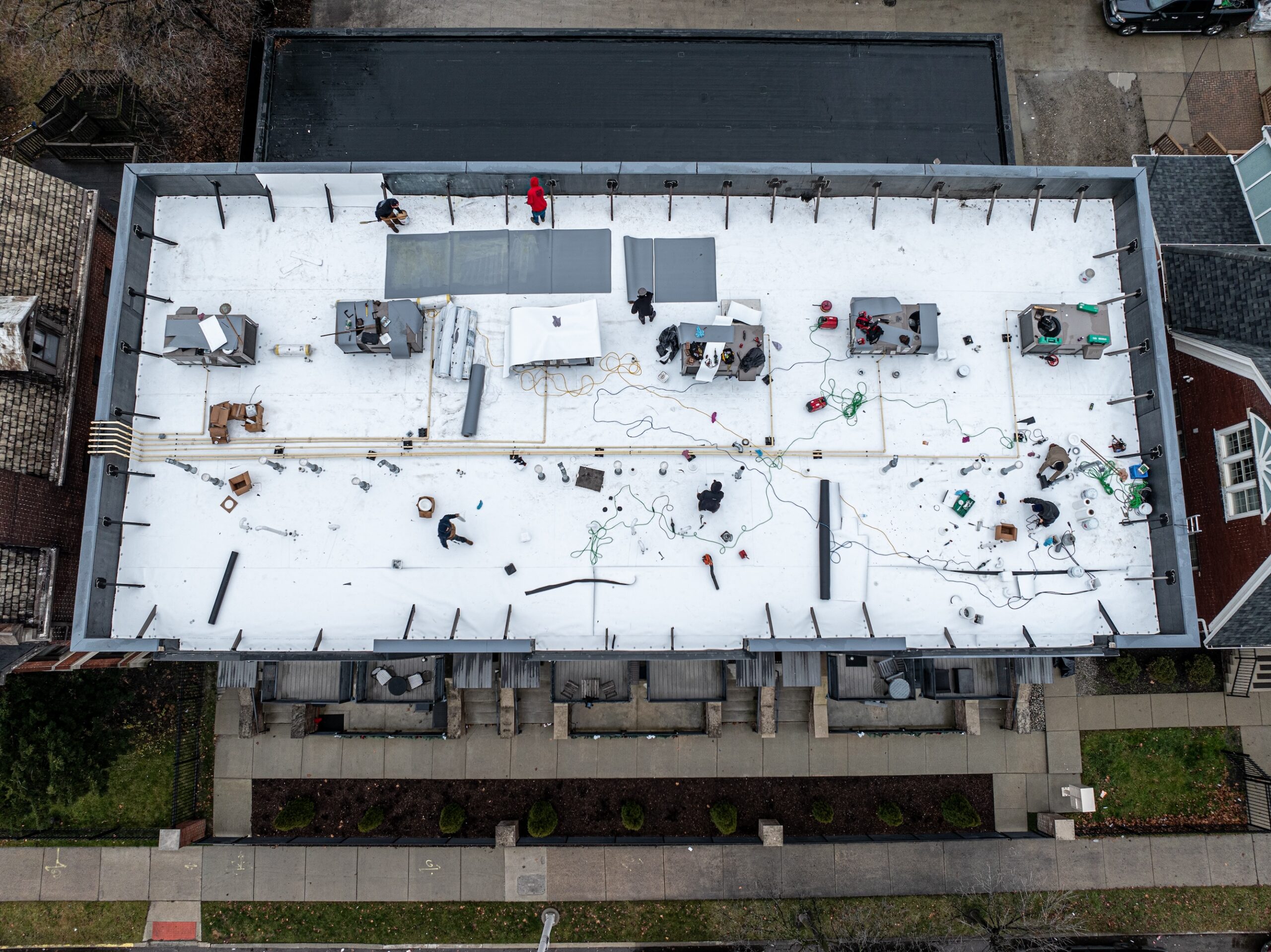
TPO is a single-ply membrane commonly used on commercial and industrial buildings. Repairs frequently involve seams, punctures, flashing, penetrations, or other localized membrane conditions. The overall membrane and insulation condition should be evaluated before deciding between repair and replacement.
EPDM Roofing
EPDM is a durable rubber roofing membrane widely found on commercial buildings throughout Michigan. Older EPDM systems may experience seam, flashing, puncture, shrinkage, or adhesion-related problems depending on their condition and installation.
PVC Roofing
PVC is another single-ply commercial membrane used on low-slope roofing systems. As with TPO, heat-welded seams and properly detailed penetrations are important to system performance.
Modified Bitumen Roofing
Modified bitumen systems use asphalt-based materials engineered for commercial low-slope roofing applications. Their repair and replacement requirements depend heavily on system age, installation method, membrane condition, and underlying moisture.
Learn more about Sterling’s commercial roofing services in Metro Detroit and Southeast Michigan.
Michigan Weather Can Accelerate Commercial Roof Problems
Commercial roofing systems in Michigan face demanding seasonal conditions. A roof may experience summer heat, autumn debris, freezing winter temperatures, accumulated snow, ice, spring rain, and repeated freeze-thaw cycles within a single year.
Small vulnerabilities can become larger problems as water enters damaged areas and temperatures fluctuate. Snow and ice can also conceal existing roof defects, while blocked drains and drainage paths can contribute to standing water.
For property managers, this makes preventative inspections particularly valuable. Finding a developing seam, flashing, drainage, or membrane problem before winter or a period of heavy rain may allow a relatively contained repair before moisture affects a larger portion of the roofing assembly.

What Should a Commercial Roof Inspection Evaluate?
A repair-versus-replacement recommendation should be based on more than a quick look at the area where water appeared inside the building. Depending on the property and roofing system, an evaluation may consider:
- Membrane condition
- Seams and laps
- Flashing and perimeter details
- Roof penetrations
- HVAC curbs and rooftop equipment
- Drains, scuppers, gutters, and drainage paths
- Signs of ponding water
- Previous repair areas
- Visible punctures, splits, cracks, or deterioration
- Insulation and moisture concerns
- Roof decking where accessible or applicable
- Parapet and edge conditions
The goal is to understand whether the observed problem is isolated or part of a broader system failure.
A Better Way for Property Managers to Compare Repair and Replacement
Rather than asking only, “Which option costs less today?” property managers should evaluate the total financial and operational impact of each approach.
Compare the Cost Over Several Years
Review repair invoices from previous years and estimate the likelihood of future service. A replacement may have a higher initial cost but lower ongoing repair exposure.
Consider Interior and Tenant Risk
The cost of a roof leak can extend far beyond roofing labor. Water can damage ceilings, walls, equipment, inventory, flooring, electrical systems, and tenant improvements. Recurring leaks can also create significant tenant-management problems.
Consider the Property’s Long-Term Plan
A building expected to remain in a portfolio for decades may justify a different capital strategy than a property scheduled for redevelopment or sale. Roofing decisions should support the larger asset-management plan.
Evaluate Energy and Insulation Opportunities
A replacement project can provide an opportunity to evaluate insulation and other roof-assembly components. These improvements should be considered in the context of applicable codes, building conditions, system design, and project objectives.
Review Warranty Options
Compare manufacturer and contractor warranty terms, required maintenance, exclusions, coverage periods, and whether the proposed roofing assembly qualifies for the desired warranty.

Questions Property Managers Should Ask Before Approving a Roofing Proposal
- What is causing the current roof problem?
- Is the damage localized or widespread?
- Is there evidence of moisture beneath the membrane?
- How much useful life may remain in the existing roof?
- What areas are included and excluded from the proposed scope?
- Are wet insulation or damaged decking included in the proposal?
- What roofing system is being proposed and why?
- How will drainage and existing penetrations be addressed?
- What warranties are available?
- How will the contractor protect tenants, customers, landscaping, vehicles, and building operations?
- What happens if additional damage is discovered after work begins?
- What preventative maintenance will be recommended after completion?
These questions make it easier to compare commercial roofing proposals based on scope and long-term value rather than price alone.
Why Preventative Maintenance Changes the Repair vs. Replacement Equation
One of the most effective ways property managers can control roofing costs is to identify problems before they become emergencies.
Routine commercial roof inspections can help identify damaged flashing, open seams, punctures, drainage problems, debris accumulation, deteriorating sealants, and other developing conditions. Addressing these issues early can help reduce the risk that moisture spreads into insulation or other parts of the roofing assembly.
Maintenance records also provide valuable documentation. When the time eventually comes to consider replacement, property managers have a clearer history of repairs, recurring problem areas, and roof performance to support capital planning.
Flat Roof Repair in Detroit, Metro Detroit & Southeast Michigan
Sterling Construction & Roofing provides commercial roofing services for property owners, property managers, HOAs, businesses, and facilities throughout Metro Detroit and Southeast Michigan.
Our commercial roofing team works with properties throughout communities including Detroit, Livonia, Southfield, Novi, Farmington Hills, West Bloomfield, Royal Oak, Troy, Birmingham, and surrounding areas across Wayne, Oakland, Macomb, Livingston, Washtenaw, and St. Clair counties.
Whether you are dealing with an active flat roof leak in Detroit, evaluating replacement at a Metro Detroit commercial property, or developing a preventative maintenance strategy for multiple buildings, the first step is understanding the actual condition of the roofing system.
Frequently Asked Questions About Flat Roof Repair vs. Replacement
Is It Better to Repair or Replace a Flat Roof?
It depends on the condition of the roofing system. Repair can make sense when damage is localized and the overall roof remains serviceable. Replacement may be the better investment when deterioration is widespread, leaks repeatedly return, underlying materials are compromised, or the roof is nearing the end of its useful life.
Can You Repair Only Part of a Commercial Flat Roof?
Yes. Localized repairs are common when the surrounding roofing system remains in acceptable condition. The affected area should be properly diagnosed so the repair addresses the source of the problem rather than only the visible symptom.
How Do I Know if Water Is Under My Flat Roof?
Interior leaks, staining, soft areas, damaged insulation, or recurring moisture can indicate water intrusion, but the extent is not always visible from the surface. A commercial roofing contractor may recommend additional evaluation depending on the roof system and conditions observed.
Can a Commercial Roof Be Replaced During Business Operations?
Many commercial roofing projects can be coordinated around ongoing building operations. Planning may include staging, access control, tenant communication, equipment coordination, safety procedures, and scheduling work to reduce disruption.
How Often Should a Commercial Flat Roof Be Inspected?
Inspection frequency depends on the roofing system, warranty, building conditions, age, and maintenance program. Property managers should also consider inspections after significant storms or whenever new signs of leakage or damage appear.
Does Ponding Water Mean My Flat Roof Needs Replacement?
Not automatically. Ponding water should be investigated because the cause may involve drainage, slope, insulation, structural conditions, or other factors. Whether repair or replacement is appropriate depends on the cause and overall roof condition.
What Is the Best Flat Roofing System for Michigan?
There is no single roofing system that is best for every Michigan commercial property. TPO, EPDM, PVC, modified bitumen, coatings, and other systems each have appropriate applications. Building use, roof design, budget, existing conditions, energy goals, drainage, and warranty requirements should guide system selection.
How Can Property Managers Reduce Commercial Roofing Costs?
Routine inspections, preventative maintenance, documented repair history, prompt response to leaks, keeping drainage systems clear, and planning replacement before an emergency can help property managers make more informed roofing investments and reduce avoidable damage.
Not Sure Whether to Repair or Replace Your Commercial Flat Roof?
Sterling Construction & Roofing can inspect your commercial roofing system, document its condition, identify problem areas, and help you evaluate whether repair, restoration, or replacement is the appropriate next step for your property.
We serve property managers, businesses, multifamily communities, HOAs, industrial facilities, and commercial property owners throughout Metro Detroit and Southeast Michigan.